
Domenic Gallippi
Mortgage Agent Level 2 - M23007938
domenic@bettermortgagesbydom.ca
Tel: 416-801-6616 | Cell: 416-801-6616
Domenic Gallippi
Mortgage Agent Level 2 - M23007938
domenic@bettermortgagesbydom.ca
Tel: 416-801-6616 | Cell: 416-801-6616
Families are stretched, businesses need to invest, and millions of mortgages are up for renewal. Is another round of rate hikes the right answer?

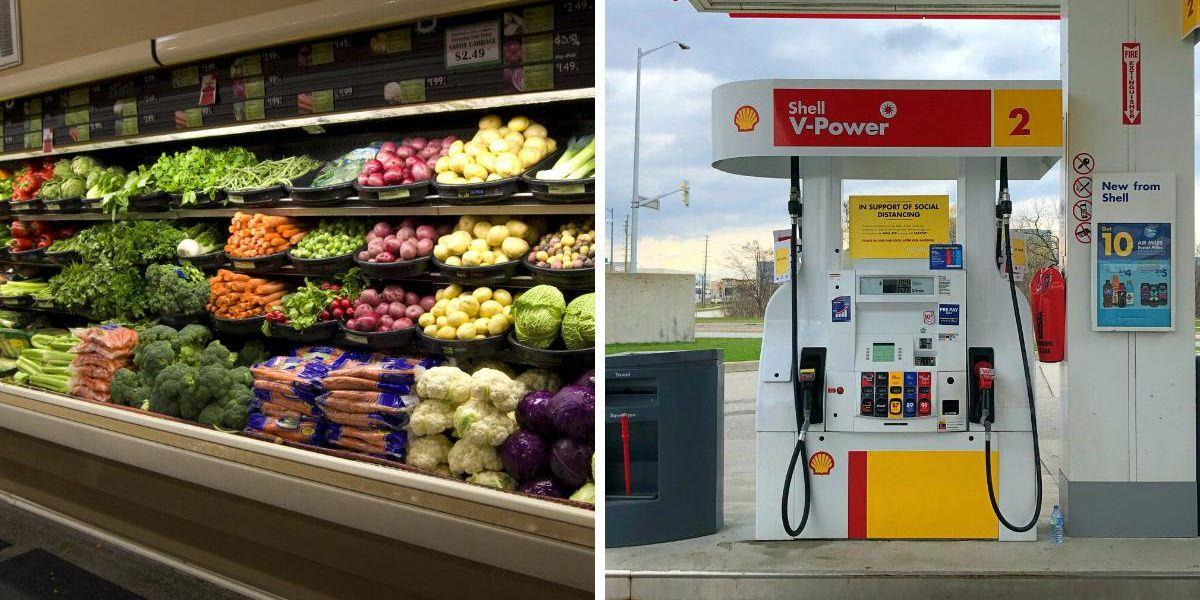
Prices are rising mainly because gas got much more expensive, not because Canadians are overspending.
Raising interest rates can't make gas cheaper. It mostly makes life harder for people who carry debt or are trying to buy a home.
The Bank of Canada raised rates this week. If more increases follow and start hurting the economy, I think there's a real chance they come back down again (eventually).
That's one reason I don't think variable-rate mortgages should be written off right now.
This is my personal view, not a prediction. The Bank of Canada sees information I don't, and it may reach a different conclusion. I'm not suggesting this is simple, or that I know better than the people responsible for it. I want to lay out the trade-offs as I see them.
After more than 30 years in financial services, I've learned that good decisions require understanding not just the problem, but the side effects of the solution.
The Bank of Canada sets a key interest rate that influences what banks charge for loans and mortgages. Banks use it to set their "prime rate," which is what most variable-rate mortgages and lines of credit are based on.
The Bank's rate went up by a quarter of a percentage point (0.25%), to 2.50%, at the Bank's October 28 decision. That's still low by historical standards, and I want to be upfront about that. The Bank said it acted to "reduce the risk that continuing high energy prices spread broadly to the prices of other goods and services," and that "there could be a need to increase the policy rate further."
One small increase most likely won't break anyone's budget. The real question is whether this becomes the start of a series of increases, given what's actually pushing prices up. And by the Bank's own description, that's mainly energy.
Here's the usual thinking behind raising rates. When people and businesses want to buy more than the economy can supply, prices go up. Making borrowing more expensive encourages everyone to spend a little less, and over time prices settle down.
That works when overspending is the problem. But what's pushing prices up right now?
In September, prices overall were 3.1% higher than a year earlier. Gas alone was up almost 28%. Take gas and other prices that jump around a lot out of the picture, and the Bank of Canada's own preferred measures show underlying inflation at about 1.8% to 1.9%. That's actually below the Bank's 2% target.
In plain terms: much of the increase comes from one thing, gas.
The Bank has real reasons to worry, and it laid them out this week. Businesses have mostly absorbed higher fuel and supply costs so far, but the Bank's surveys suggest they'll pass more of those costs on to customers over the next year. Canadians' expectations for inflation in the near term have also risen. The Bank now expects inflation to climb to about 3.5% by the end of this year and average about 3% in 2027, before returning to 2% by mid-2028.
That deserves an honest answer. Here's mine. The Bank isn't saying Canadians are overspending. It's saying high energy costs are spreading into other prices, which is the same gas-price problem working its way through the system. Its forecast depends heavily on energy prices staying high. By the Bank's own account, longer-term inflation expectations remain steady and underlying inflation is still close to 2%. The real danger would be wages and prices chasing each other upward, and with unemployment stuck at 6.5%, that seems less likely than it did a few years ago. Some will argue that while households aren’t overspending, governments are, and that public spending is adding to demand. That’s a fair debate. But it’s a reason to look closely at government spending, not to make households carry the whole adjustment.
There’s one more argument for the increase worth acknowledging. U.S. interest rates are well above ours. If Canada keeps rates much lower, our dollar can weaken, making imported goods more expensive and adding to inflation. That’s a real concern. For now, though, the Bank says the dollar has recovered to about the level it expected in July, so it isn’t the main pressure on prices.
I could be wrong. But paying more for the same groceries and the same tank of gas isn't the same as overspending. Higher interest rates can't produce more oil, remove a tariff or fix a supply chain.
The economy has done better than expected lately. It grew at a 3.3% annual pace in the spring and about 2% over the summer, and the Bank describes consumer spending as solid. That's good news, and I want to acknowledge it.
But the gains haven't reached the job market. Unemployment has been stuck around 6.5% for months, and Canada lost 68,000 jobs in September. The Bank itself says there's still slack in the economy, expects new U.S. tariffs to slow growth this fall, and sees housing staying weak. People who've lost work or can't get enough hours aren't the ones driving prices up. The worry many economists are raising is stagflation: prices rising while the economy struggles and jobs are hard to find. Higher rates can make the struggling part worse without doing much about energy prices. How much more slowdown do we want to create on purpose?

For years, Canada has lagged in productivity: how much value we produce for each hour worked. Over time, that's what drives higher wages and a better standard of living. Improving it means businesses investing in equipment, technology and training, which often requires borrowing.
To be fair, cheap borrowing didn't fix this problem in the past. Rates were very low for much of the last decade, and productivity stayed weak. Taxes, regulation and confidence matter at least as much.
My point is narrower. Business investment has picked up recently, but much of it is in oil and gas and in machinery and equipment. Sectors hit by U.S. tariffs are still struggling. Raising borrowing costs gives businesses one more reason to wait, at exactly the moment we need broader investment.
When the Bank of Canada raises its rate, banks raise their prime rate within days. That immediately increases the cost of home equity lines of credit (HELOCs), variable-rate mortgages and other loans tied to prime. It's not only new borrowers who pay more.
One small increase is manageable. Several add up. Below is the extra interest on a $200,000 HELOC balance (although, from what I have seen, the average GTA household’s total secured lending debt - that’s their mortgage and/or HELOC - is quite a bit more than $200,000):
|
Total rate increase |
Extra interest per year |
Extra interest per month |
|---|---|---|
|
0.25% (one increase) |
about $500 |
about $42 |
|
0.50% (two increases) |
about $1,000 |
about $83 |
|
1.00% (four increases) |
about $2,000 |
about $167 |
With some variable-rate mortgages, the monthly payment goes up right away. With others, the payment stays the same, but more of it goes to interest and less to paying down the mortgage.
Fixed mortgage rates don't follow the Bank of Canada directly. They follow the bond market, the rates investors earn for lending to governments. Those rates rose in the weeks before this announcement as investors braced for higher rates. So people shopping for a fixed rate were already paying more before the Bank acted.
Millions of Canadians are renewing their mortgages in 2026 and 2027, many of them borrowed when rates were very low.
If you renew with your current lender, you don't have to qualify again. If you want to switch to a different lender for a better rate, you do. The "stress test" no longer applies to a simple switch, but you still have to show your income can support the new payment.
That's where rising rates hurt. A higher payment can push someone past what a new lender will approve. If they can't qualify elsewhere, they lose their bargaining power and may have to accept whatever their current lender offers.
Unfortunately, I've seen lenders take advantage of this. Some send an uncompetitive renewal rate up front. Often, it's only after a client comes back informed and ready to negotiate that the bank offers a better rate, sometimes at the last minute. People who don't know to push back may simply sign.
The Bank of Canada estimated earlier this year that one large group of borrowers renewing would see payments rise by about 15% on average. That was before this week's increase.
We tend to picture rate hikes discouraging a vacation, a luxury upgrade or a new fancy car. But that's not how all borrowing works.
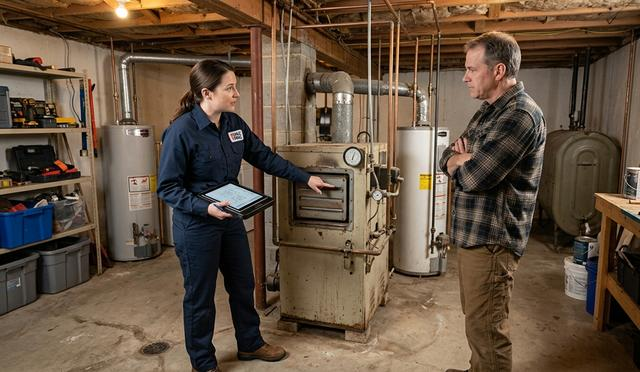
Some families use credit to cover essentials when money is tight. Others borrow to look after their homes. I see this in my practice all the time: homeowners using a HELOC to replace a failing roof, fix water damage or replace an old furnace.
According to a CMHC report covered by Global News, nearly one million Canadian homes needed major repairs as of the 2021 Census. A roof repair can be put off, but that doesn't make it a luxury. Repairs that wait usually get worse and cost more.
To be clear, plenty of HELOC borrowing goes to investments, renovations and wants rather than needs. But borrowing to keep your home in good shape is different from borrowing to splurge, even though both get more expensive when rates rise.
The Bank of Canada says most mortgage holders have handled higher payments so far. At the same time, the number of people falling behind on their mortgage has been rising, and Canada's bank regulator has warned it could rise further.
Both things can be true. Most people keep up while a smaller, growing group struggles. And many who are keeping up are doing it by draining savings, cutting back or leaning on credit cards.
Missed mortgage payments are still low compared with the past. This isn't a crisis. But paying on time isn't the same as paying comfortably.
Governments want more homes built - and they are right, we need them. Builders borrow to buy land and pay for construction, so higher rates can make projects too expensive to go ahead. That calculus is actually one of the reasons housing starts have been dull for over a year now
Buyers also need to qualify. Most buyers must prove they could afford their payments at a rate about two percentage points higher than the one they're actually getting. When rates rise, that bar rises too, and people can afford less, even if their income and savings haven't changed.
Lower rates aren't a magic fix. If buyers rush back faster than homes get built, prices can climb. But affordability needs both: homes that make sense to build, and buyers who can qualify for them.

Some of the pressure on prices could ease without making borrowing more expensive. On October 23, the U.S. removed tariffs on some Canadian farm products, packaging and equipment. It's a small step, and new tariffs were added on other goods at the same time. But it shows trade friction can ease where it's visibly raising costs. And if the conflict involving Iran settles down, gas prices could come down with it. That's a possibility, not a forecast. The Bank itself names the Middle East as the biggest risk to its inflation forecast, so this matters a great deal.
None of this means rates should never go up. If higher prices spread and become a lasting problem, raising rates may be necessary even though it hurts. Stable prices matter for everyone.
But interest rates are a blunt tool. Problems with supply need supply solutions too: faster approvals for new housing, fewer trade barriers, and support for businesses that want to invest. These take time, and they don't replace the Bank of Canada's job. But they help in a way that doesn't depend on Canadians spending less.
This week's increase may not be the last. The Bank said it may need to raise rates further, and many economists expect at least one more increase by spring.
But I don't think a long series of increases is a given. The Bank says it will make decisions "one meeting at a time." Rate increases take a year or more to fully work through the economy. If unemployment stays high, housing stays weak and energy prices ease, the Bank could find that higher rates are doing more harm than good. I can see it pausing and then, over the next year or so, bringing rates back down.
The federal budget on November 5 is another wild card. If it adds significant new spending, the Bank may feel more pressure to keep raising rates. If it’s more restrained, the Bank may have more room to pause.
This has happened before. The U.S. Federal Reserve raised rates through 2018, then reversed course and cut three times in 2019 as the economy slowed. I'm not predicting the same thing here, but a series of increases doesn't have to be permanent.
Lately, many in my industry have stopped recommending variable-rate mortgages. The common advice is a shorter fixed term, often three years, to "wait out" the uncertainty and revisit later.
I'm not convinced that's the right answer for everyone. Right now, the gap between variable and fixed rates is wide enough that a variable rate can absorb several increases and still come out ahead.
A client of mine recently arranged a mortgage with more than 20% down on a home under $1 million. They were offered a 3-year fixed rate of 4.64%. Instead, they chose a 5-year variable rate of 3.65% (prime minus 0.80%).
That's a difference of almost one percent. Even after this week's increase, their variable rate is still about three-quarters of a percentage point below the fixed rate they turned down. Prime would have to rise about three more times before it caught up.
Here's how that could play out over three years on a $500,000 mortgage paid off over 25 years. These are illustrations only, not predictions:
|
What happens to rates |
Interest paid over 3 years |
Compared with the 3-year fixed |
|---|---|---|
|
3-year fixed at 4.64% |
about $67,300 |
(baseline) |
|
Variable: this week's increase, one more, then both reversed |
about $55,700 |
about $11,600 less |
|
Variable: only this week's increase |
about $56,400 |
about $10,900 less |
|
Variable: four increases within 9 months (including this week's) |
about $65,900 |
about $1,400 less |
|
Variable: six increases within a year (including this week's) |
about $71,000 |
about $3,700 more |
Assumes the variable payment adjusts when rates change. Actual results depend on your lender, timing and mortgage terms.
Even after this week's increase, the variable payment is lower: about $2,610 a month versus about $2,820 for the fixed, roughly $210 less. Rates would have to rise more than four times in total, and quickly, before the fixed rate comes out ahead.
There are other advantages to consider:
Lower penalties: Breaking a variable-rate mortgage early usually costs about three months' interest. Breaking a fixed rate can cost much more.
Option to lock in: Many lenders let you switch from variable to fixed during the term if you become uncomfortable.
Longer discount: The client's 5-year variable keeps its discount from prime for five years. Someone in a 3-year fixed will renew in 2029 at whatever rates are then.
Variable isn't right for everyone. If your budget couldn't handle a higher payment, or rate changes would keep you up at night, fixed may still be the better fit. The point is to compare the actual numbers for your situation, not to follow a rule of thumb.
I'll say it openly: I'd prefer this not turn into a long series of increases unless there's a strong reason for it.
Part of that comes from my work. I meet people trying to buy their first home, move to a place that suits their family, renew their mortgage or get their monthly payments under control. Most are working hard and making responsible choices. Some are struggling to qualify. Others are keeping up only by making tough trade-offs.
I also know my view has limits. I see borrowers' challenges up close, but not every part of the economy. My experience gives me a perspective, not all the answers.
So I keep coming back to a few questions. Are Canadians spending too much, or paying too much for what they need? Are higher rates discouraging unnecessary borrowing, or making it harder to manage essential costs? Are we helping Canadians build and buy homes, and helping businesses invest?
The Bank of Canada may see it differently, and that's part of a healthy debate. But the goal shouldn't simply be to make Canadians spend less. It should be an economy where people can earn more, afford more and build real financial security, while keeping prices stable.

If you're wondering how rate increases could affect your mortgage, HELOC or upcoming renewal, or whether variable or fixed makes more sense for you right now, I'm happy to walk through the numbers with you.
Sometimes the most valuable first step is simply understanding your options.
Better Mortgages by Dom. Looking beyond the rate
Domenic Gallippi, MBA, PFP | Mortgage Agent Level 2, Licence #M23007938 | Get A Better Mortgage Inc., Brokerage Licence 10874
This article reflects the author's personal views and is for general information only. It is not financial, legal or tax advice. The rates in the client example were offered in October 2026 and may not be available today; the cost comparisons are illustrations, not guarantees. Speak with a licensed professional about your specific situation.
RBC Economics: Canadian inflation ticked higher in September
Reuters poll: Bank of Canada to raise rates on October 28 and again by end-March
MoneySense: Bank of Canada interest rate forecast, October 2026
NBC News: Trump administration cancels some Canada tariffs (Oct. 23, 2026)