
Domenic Gallippi
Mortgage Agent Level 2 - M23007938
domenic@bettermortgagesbydom.ca
Tel: 416-801-6616 | Cell: 416-801-6616
Domenic Gallippi
Mortgage Agent Level 2 - M23007938
domenic@bettermortgagesbydom.ca
Tel: 416-801-6616 | Cell: 416-801-6616
As we start 2026, many homeowners with variable-rate mortgages are revisiting a familiar question:
Should I stay variable, or should I lock into a fixed rate now?
For much of last year, it was widely assumed that rates would continue to fall — and that variable-rate borrowers would naturally benefit from that. While the prime rate has come down meaningfully from its peak, fixed mortgage rates have not followed at the same pace.
Looking ahead, rate forecasts for 2026 begin to diverge. Some major banks see the possibility of modest rate increases, while others expect rates to remain on hold through 2026 and beyond. What’s consistent across forecasts is that further meaningful rate cuts are no longer widely expected. For borrowers, this means that banking on variable rates continuing to fall — or on fixed rates dropping enough to “lock in later” — may not play out as hoped. We appear to be entering a more stable, but not permanently lower, rate environment, where variable-rate relief is largely behind us and fixed rates may gradually face upward pressure over time.
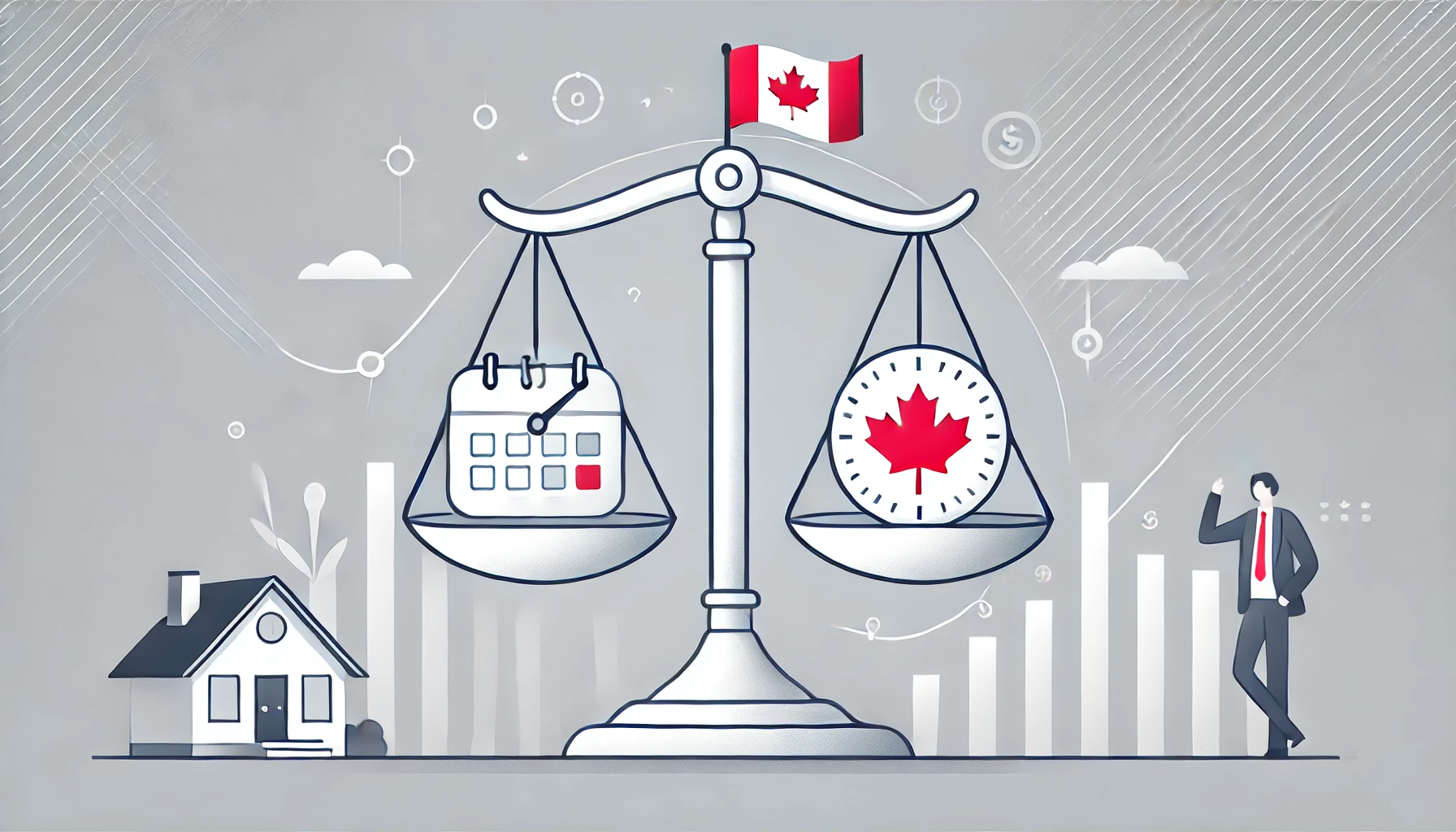
This divergence has changed the decision-making framework.
Bank of Canada policy rate: 2.25%
Prime rate: 4.45%
Many variable-rate holders are currently paying Prime minus a discount (avg discount is about 0.50% → for a net current rate of 3.95%), which is still lower than today’s fixed-rate options (which are currently ranging from 4.10% to 4.50% on 5yr terms depending on the loan-to-value (LTV)) or mortgage purpose.
That reality leads to an important point:
Choosing between variable and fixed is no longer about chasing the lowest rate.
Many borrowers originally chose variable with the idea that: “Once fixed rates fall enough, I’ll lock in.”
What we’ve seen instead is:
Prime rates came down
Variable rates followed
Fixed rates stayed relatively sticky
As a result, locking into fixed today often means locking in at a higher rate than variable, which forces a different question:
Are you locking in because you believe rates will rise — or because you want certainty?
Those are very different reasons.

Staying variable may be appropriate if:
Your cash flow can absorb fluctuations
You’re comfortable with uncertainty
You value flexibility
You believe rates will pause or move gradually
Flexibility is a key advantage here. Variable mortgages typically come with much lower penalties (often three months’ interest) if you need to sell, refinance, or restructure.
Locking into fixed can make sense if:
Payment certainty is important
Rate volatility (specifically increases) would create stress
Budget predictability matters more than optimization
You believe rates could trend higher over time
Peace of mind is a valid reason - even if the fixed rate is higher today.
The decision between variable and fixed should be based on:
Your financial situation
Your risk tolerance
Your future plans
Your comfort with uncertainty
Not on headlines — and not on rate comparisons alone.
If you’re unsure, a short conversation can often bring clarity.
Would you like to review your situation to help you make a decision? Ready to discuss your home ownership goals and a Better Mortgage by Dom?
Call/text: 416 801-6616. Email: Domenic@BetterMortgagesByDom.ca
Connect/Follow me: Facebook, Instagram, X (formerly Twitter), LinkedIn
Download my app - featuring premium interactive tools, calculators, and illustrators for smart planning and real-time rate updates
Please share with anyone that you think can benefit from my help - all introductions are greatly appreciated!